

With advice and experience but no tips on how to find parking spaces, successful ChE graduates return to campus
Eight graduates recently returned to the University of Florida to reflect on their time in the Department of Chemical Engineering and share career advice with current students. The Distinguished Alumni Forum also honored retired professors Mark Orazem, Ph.D., and Timothy Anderson, Ph.D., whose careers and mentorship helped shape generations of engineers.
The alumni traveled from as close as Tampa and as far away as Korea. Former students Arnold Howard, Ph.D., and Mark Montoya, Ph.D., moderated the event.
The forum brought together accomplished engineers whose careers span semiconductor processing, materials science, industrial management and advanced chemical systems. Through their career stories and personal recollections, the alumni offered students real-world advice while celebrating the professors who had influenced their journeys.
The alumni panel discussed their career paths and areas of expertise. Anderson and Orazem then reflected on their own careers before an audience of about 20 students, faculty and staff.
Anderson and Orazem’s Careers at UF
Anderson and Orazem met as graduate students at the University of California, Berkeley, where they played together on an intramural softball team. In 1988, Anderson and his colleagues at UF convinced Orazem to join the university. Howard soon followed, joining Anderson’s research group.
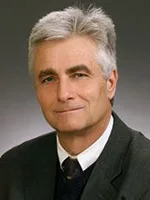
Anderson was eventually promoted to distinguished professor. He served as department chair from 1991 to 2003 and as associate dean of Research and Graduate Programs in the Herbert Wertheim College of Engineering from 2003 to 2009. In 2013, he joined the University of Massachusetts Amherst as dean of the College of Engineering, serving until his retirement in 2018.
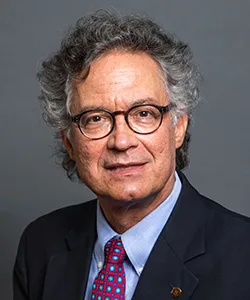
Orazem served as a distinguished professor of chemical engineering and associate chair for Graduate Studies. He was recognized as a UF Foundation Preeminence Professor, received numerous UF term professorships and published several books. He retired in August.
Advice and Memories from the Alumni
Hiral M. Ajmera, Ph.D., graduated in 2007, with Anderson as his advisor. Ajmera has worked primarily in the semiconductor industry, including at Microsoft, and currently works at Intel Corp.
“The promise of a good future is sometimes better than the actual future,” he said, stressing the importance of developing problem-solving skills and empathy.
Christopher L. Alexander, Ph.D., a 2017 graduate, earned his master’s degree in civil engineering and his Ph.D. in chemical engineering at UF. He is currently an associate professor in the Department of Civil & Chemical Engineering at the University of South Florida, where he directs their Corrosion Research Laboratory.
Eric Bretschneider received his Ph.D. in chemical engineering in 1997 and has worked primarily in the optoelectronics and lighting industry. His advice to current students: Do not be a loner.
“Focus on teamwork and embrace a helpful attitude toward others,” he said.
Madhav Durbha, Ph.D., graduated in 1998. His career focuses on supply chain technology; he serves as group vice president at RELEX Solutions. Reflecting on his time at UF, he noted, “I still can’t find parking on campus, students always fill the seats from the back, and Orazem is still charming and well-dressed.”
Durbha also assured the audience that it’s OK to make mistakes because failure teaches you more than success. In his opinion, people don’t lose jobs to artificial intelligence; they lose to “people who use AI better.”
Arnold Howard, Ph.D., received his Ph.D. from UF in 1990. He retired in late 2025 from Los Alamos National Laboratory after a career in semiconductors. He urged students to focus on networking, teamwork and problem-solving as they enter the workforce.
John Krawczyk earned his master’s degree in chemical engineering in 1988 and built a career in chemical processing. He has started two companies: Flow Simulations, Inc. and CoinBid, LLC.
Mark Montoya, Ph.D., who recently retired, worked in the semiconductor industry after graduating in 1994. His campus recollections included learning to scuba dive, savoring potluck dinners, biking to school and enjoying the camaraderie at UF.
“Live with the people you study with,” he advised the crowd. Shared goals and bumps along the way, he explained, help develop bonds and provide support.
One memorable experience involved babysitting Orazem’s daughter, Athéna, while Montoya was a Ph.D. student. At age 2, she showed Montoya how to dismantle the child-safety devices in the house and then advised him to keep quiet about it.
Montoya did not keep quiet.
“I knew then that Athéna was destined for a life of science or a life of crime,” Orazem responded. “Fortunately, she chose science, but, as I read the newspapers, I wonder if crime may pay better.”
Chinho Park, Ph.D., has worked in the photovoltaics and semiconductor industries. For the past five years, he has served as provost and acting president at the Korea Institute of Energy Technology. He traveled from Korea for the event and was Anderson’s first Ph.D. graduate.