
Share
ChE Building Remodeling Begins
By Ada Lang
Marketing and Communications Specialist
If you’ve been near the University of Florida’s Department of Chemical Engineering in recent months, you’ve likely noticed moving trucks, gigantic boxes and hand carts stacked with supplies.
What is going on?
Well, thanks to over $40 million provided by the state of Florida, the ChE building is being emptied and remodeled. Labs and offices are being relocated, and construction will begin soon on the 50-plus-year-old building’s long-anticipated remodel.
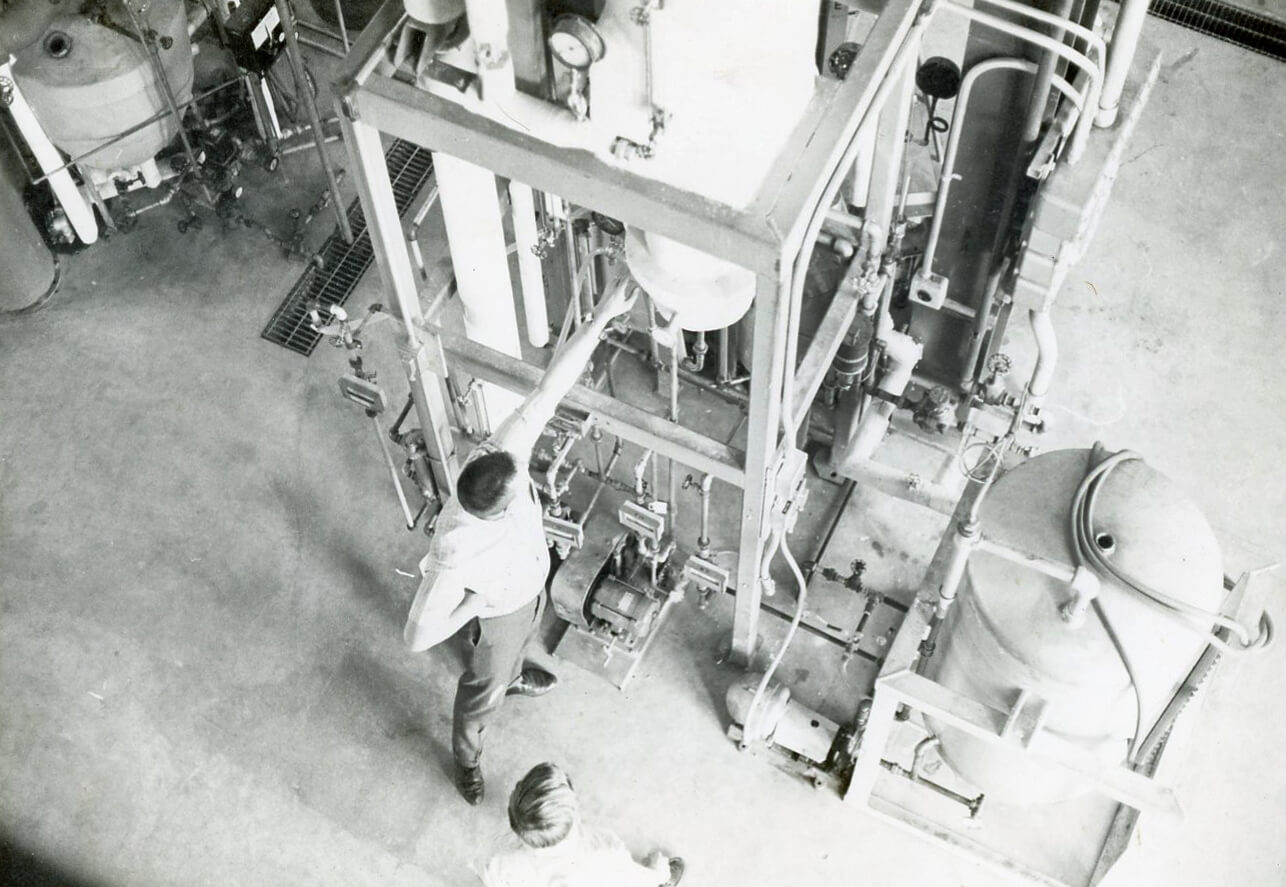
Built in 1969, the building’s red brick facade, short windows, exterior stairs and concrete accents reflect its age. The interior, with its freight elevator and dark hallways, belies the important work happening in the labs. According to department chair Carlos Rinaldi-Ramos, Ph.D., a lot has changed since 1969 with research areas, instrumentation and safety associated with chemical engineering research.
“This remodeling project will completely replace utilities (electricity, water, plumbing) to meet current standards,” he said. “We will vastly increase fume-hood capacity per laboratory, which will support safety in research and enable work in important areas like materials synthesis and reaction engineering. The addition of a building autoclave will enable biomolecular engineering research not currently feasible in the building.”


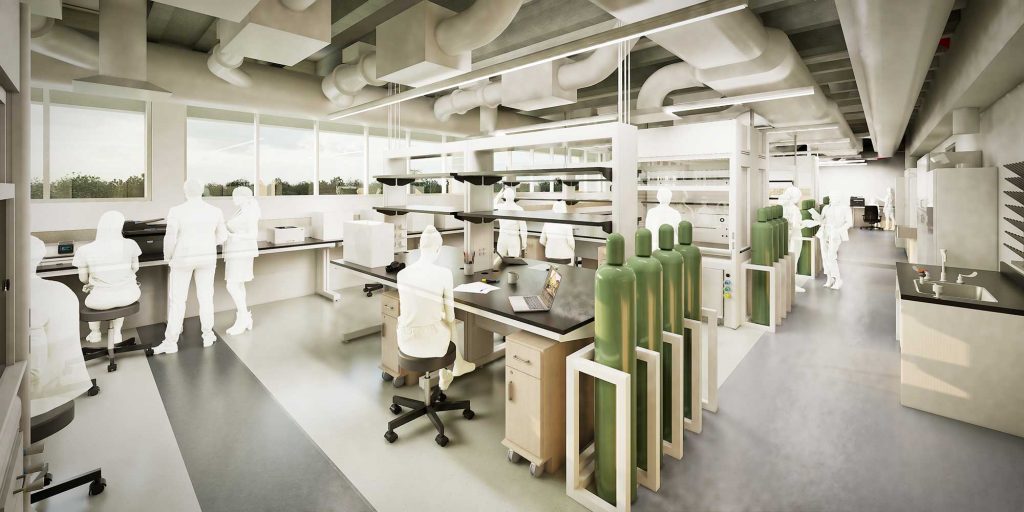



Additionally, the first floor will house a pre-Good Manufacturing Practices laboratory that will enable researchers throughout UF’s Herbert Wertheim College of Engineering to evaluate synthesis and production of biomolecules and biomaterials under conditions that approach those used for the manufacturing of clinical products. This effort is led by Greg Hudalla, Ph.D., an associate professor and the Integra LifeSciences term professor in biomedical engineering.
“Overall, this will greatly expand research capacity, and the facilities will reflect the excellence of the research conducted by our faculty and students, which we believe will help us recruit and retain the best talent,” Rinaldi-Ramos added.
The new research spaces mesh with the department’s long-term goals and academic priorities by:
- Expanding the ability to perform research at the edge of the chemical engineering discipline
- Modernizing the experiential learning laboratories
- Providing exciting opportunities for undergraduate and graduate students to apply what they learn in the classroom using new experimental equipment that reflects chemical engineering concepts and real-world applications
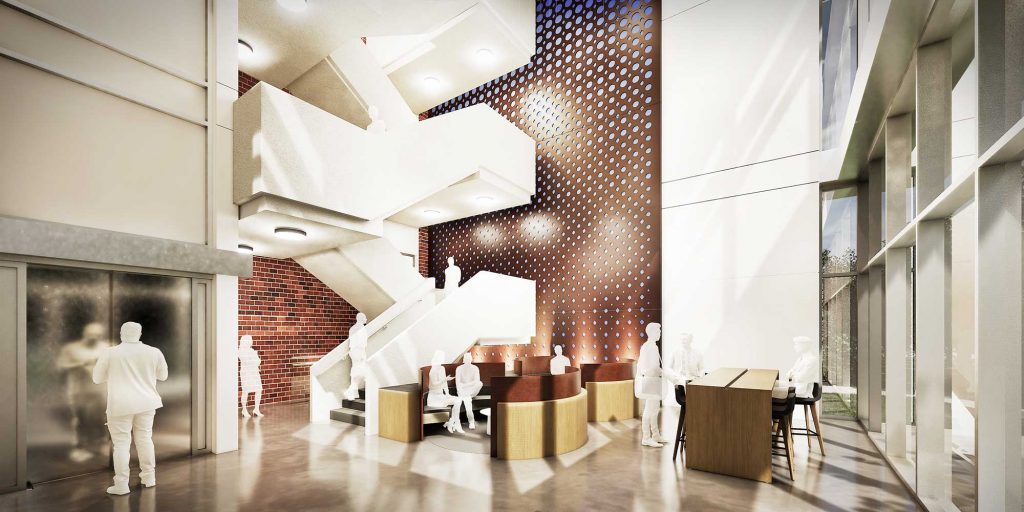
In addition to new and modernized labs, the project will refurbish the main entry and exterior stairs. The north entrance will be enveloped in a two-story atrium entry to create a light-filled lobby with a new elevator. The new Unit Ops Laboratory (UOL) will be on the second floor and have glass walls facing the corridors. Additionally, there will be two new teaching laboratories dedicated to biomolecular engineering and advanced manufacturing.
The building also will house study spaces and a lounge for students and faculty, as well as faculty office spaces. The department administration offices will be on the second floor (at the west end of the building) in the space currently housing the UOL. Flex spaces can be used for advisory board and faculty meetings.
Due to the anticipated two-year remodeling, all research laboratories and the UOL will be temporarily relocated to other buildings.
Thanks to a generous $500,000 investment by the College of Engineering, the UOL has been relocated to the Nuclear Sciences Building and is now equipped with a suite of new hands-on teaching modules. This investment will improve student learning and better prepare graduates for the job market.
“The new, state-of-the-art equipment includes a chromatography unit and a tangential flow filtration unit. These specific units are used in bioprocessing separations, such as separating waste proteins out of vaccines,” said LiLu Tian Funkenbusch, Ph.D., an instructional assistant professor in the department.
Once remodeling is complete, the UOL will move to the newly renovated space on the second floor, co-located with the department’s administrative and academic offices, and the planned Biomolecular Engineering and Advanced Chemical Engineering teaching laboratories.
The new hands-on learning equipment, Rinaldi-Ramos said, “will provide experiences where students apply what they learn in the classroom using modern equipment that reflects the breadth of chemical engineering jobs in industries ranging from fine chemicals and energy to food and beverages, personal care products, semiconductor manufacturing, and biotechnology/biopharmaceuticals. Modern facilities that provide opportunities to learn and research safely and collaboratively are critical to attracting and retaining the best talent, be it faculty or students.”