
- Janani Sampath won an NSF CAREER award to study molecular degradation of PIM polymer membranes, aiming for durable, energy-efficient filters.
- Using atomistic simulations, her team observes chain rearrangements in real time, enabling predictive-aging models before polymer synthesis.
- The project expands STEM access, offering computational training to K–12, undergrads and blind students, fostering a broader scientific pipeline.
When you drink water or fill your gas tank, you may not think about the industrial separation processes that make those fluids consumable. But Janani Sampath, Ph.D., does, and she’s making sure the membranes used in these processes do not degrade over time.
As such, the National Science Foundation (NSF) awarded the University of Florida’s chemical engineering assistant professor with the coveted NSF CAREER award.
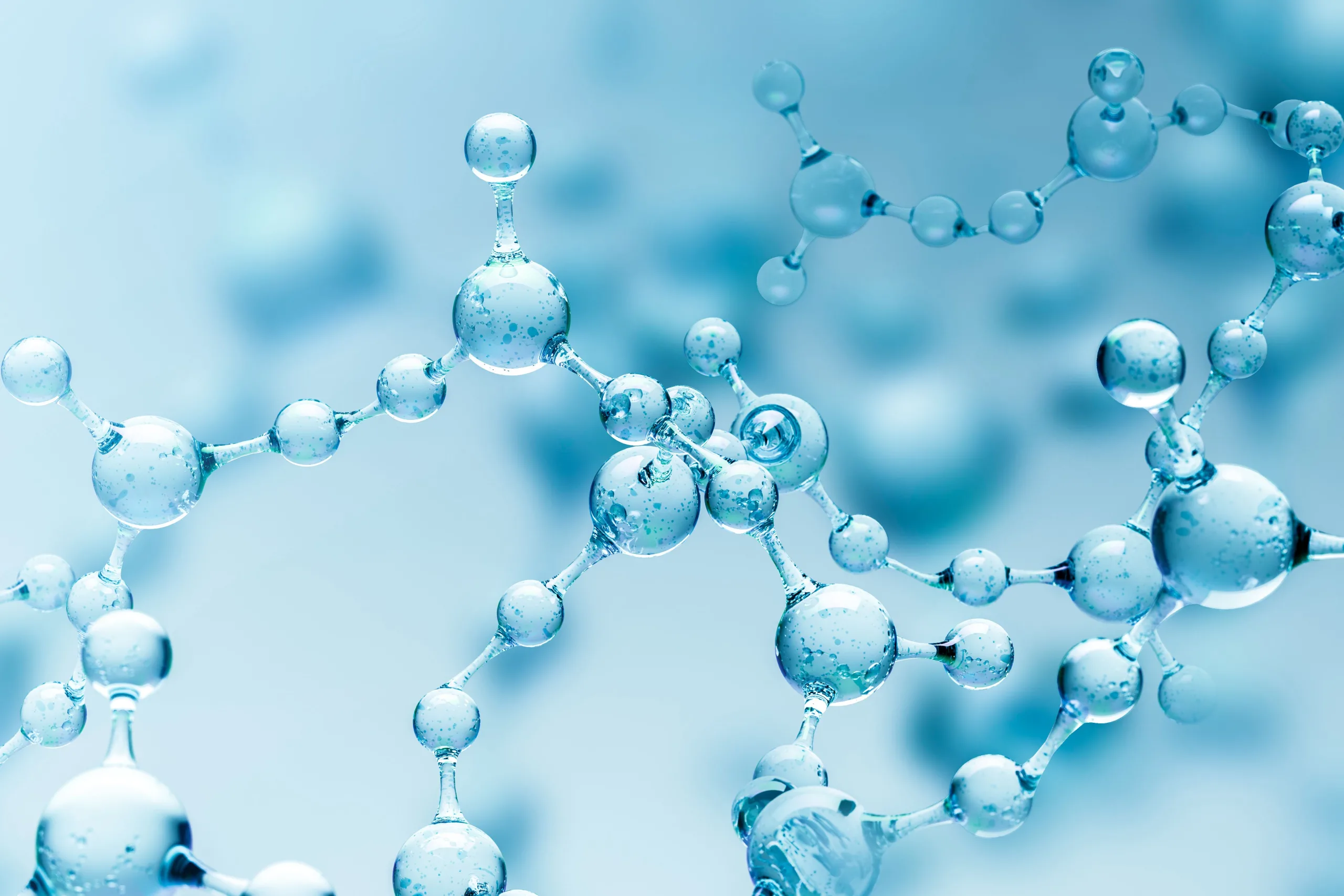
Sampath’s UF research group aims to understand how membranes degrade through a process known as physical aging at the molecular level – essentially, what the polymer chains are doing as the material slowly “ages.” Polymers are molecular chains formed when monomer atoms bond together repeatedly, like beads on a necklace.
Assistant Professor
“Once we understand the mechanism, we can begin designing membranes that resist it. The payoff is significant — more durable, energy-efficient membranes could reduce industrial energy consumption on a meaningful scale, lowering both costs and carbon emissions across sectors from water treatment to chemical manufacturing,” she explained.
In Florida, we utilize home water filters, desalination systems and industrial purification. The membranes used in these processes affect the cost and reliability of the end products. Our geography, population growth and water security face challenges that rely on more durable and efficient membranes to extend the operational lifetimes of the purification systems.
The field of membrane science is decades old, and researchers have long known that the amorphous polymers in membranes are made of disordered, randomly arranged polymer chains that slowly relax over time – essentially physical aging.
A special class of polymers called Polymers of Intrinsic Microporosity (PIMS) has a loose molecular architecture with abundant internal space that allows gas molecules to pass through quickly and selectively. But in real applications, understanding aging-related performances is a real obstacle.
“The missing piece has been a molecular-level understanding of how the chains rearrange during aging, something that is extremely difficult to observe experimentally. Molecular simulations have matured to the point where they can now address this gap directly, and this research applies it systematically for the first time to this class of materials,” Sampath said.
Currently, physical aging in PIMS and other membranes is tracked by measuring membrane performance before and after it degrades. That is great for determining the outcome, but not the cause.
By using atomistic molecular simulations and theoretical models from the field of glassy physics, her group will observe the underlying structural changes in real time at the nanoscale. And by developing a predictive framework or a set of molecular descriptors, they will be able to forecast how a polymer will age before it’s even synthesized.
This could be a transformative development.
“If successful, this work represents a genuine leap,” she said. “It will be the first time the molecular mechanisms of physical aging in high free-volume polymers like PIMs is directly observed and quantified through simulation, rather than inferred indirectly from performance data.”
Having a predictive framework for aging behavior – knowing in advance how a material will degrade based on its molecular structure – could significantly accelerate that development process.
If you want to make a membrane that lasts longer or works more efficiently, she said, the answers are written in how its molecules are arranged and how they move.
“Polymer membranes are a compelling target because the stakes are so high. Current separation technologies are enormously energy-intensive, and membranes offer a real path to reducing that. But the physical aging problem is a genuine bottleneck preventing wider adoption,” she said.
Sampath is excited about the award’s impact on her students because it includes an educational component that broadens access to molecular simulations, a computational tool used across virtually every engineering and science discipline, but one that most students don’t encounter until graduate school, if at all.
“The project will develop training activities open to K–12 and undergraduate students, giving them hands-on exposure to the kinds of computational methods used in cutting-edge research. Notably, the project also works to make molecular simulation accessible to blind and visually impaired students, a group that has historically faced significant barriers to participation in STEM research. The goal is not just to train future researchers, but to actively widen the pipeline into STEM careers,” Sampath explained.
Growing up in India, Sampath earned her bachelor’s degree in chemical engineering in 2010 from R.V. College of Engineering in Bengaluru, followed by a stint in Unilever R&D as a research engineer. A stop at Ohio State University earned her a doctorate in chemical engineering in 2018. She landed in Gainesville as an assistant professor in 2021.